How much does a concrete patio cost in Clarksville, TN?
Concrete patio cost in Clarksville, TN starts from national numbers: Angi puts patios at $4 to $30 per square foot, with most homeowners paying $1,916 to $5,243 and a national average of $3,451. A plain 12x12 broom-finish slab runs about $850 to $2,300. Tear-out, grading and drainage on your lot move the final price most.
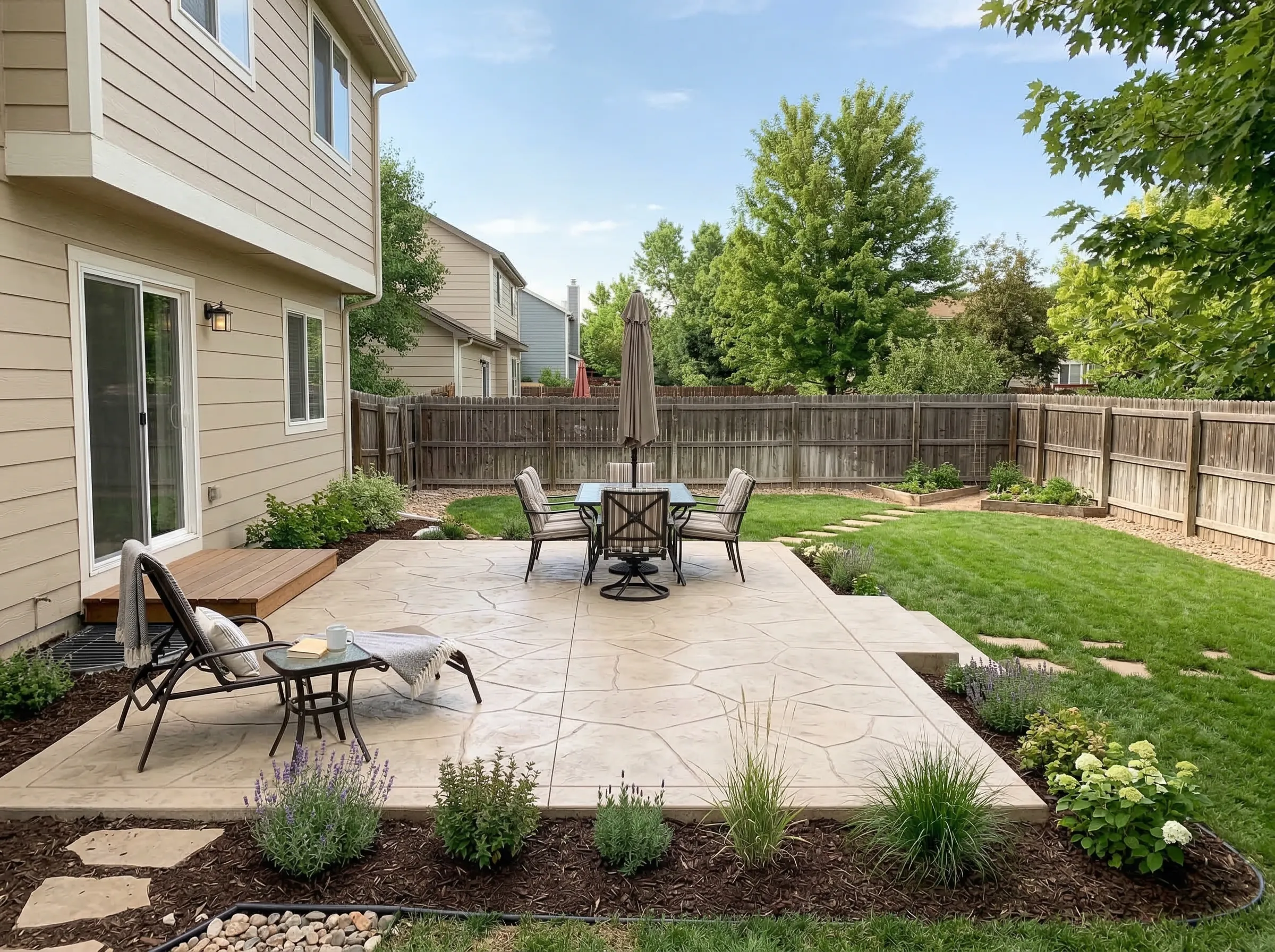
National cost figures are a fair starting point, but they don't know that your backyard in Sango slopes toward the house, or that an old cracked slab has to come out first. Below are the national numbers, then the Clarksville site work that changes them. Our concrete patio builder page for Clarksville covers how we plan and pour one.
What is the concrete patio cost in Clarksville, TN by size?
Angi's 2026 national data puts a 10x10 concrete patio at $600 to $1,600 and a 20x20 at $2,400 to $6,400. Per square foot, the range is $4 to $30. Clarksville quotes follow the same pattern, then add or subtract for tear-out, grading, access and finish on your specific lot.
| Patio size | Square feet | National cost range |
|---|---|---|
| 10x10 | 100 | $600 to $1,600 |
| 12x12 | 144 | $850 to $2,300 |
| 12x14 | 168 | $1,000 to $2,700 |
| 15x15 | 225 | $1,350 to $3,600 |
| 16x20 | 320 | $1,900 to $5,100 |
| 20x20 | 400 | $2,400 to $6,400 |
The table assumes a fairly flat, open yard and a simple finish. The per-square-foot range is wide because it covers everything from a plain broom slab to a decorative pour with color and pattern, and Angi's full spread runs from about $800 to around $9,950.
To size yours, set your furniture on the lawn and walk around it. A table with four chairs needs about 12 feet across, and adding a grill pushes you to 12x14 or larger. Pouring the right size once costs less than joining a second slab later.
What makes a Clarksville concrete patio quote go up or down?
Four things move a Clarksville patio price more than the concrete itself: tearing out an old slab, grading a sloped lot, fixing drainage, and how easily a truck or buggy can reach the backyard. Thickness and reinforcement matter too, so ask about them line by line in the estimate.
Tearing out an old slab
If a cracked patio or an old pad of pavers is sitting where the new slab goes, it has to come out and be hauled off. Angi lists old concrete removal at $550 to $1,700 on average. Thick slabs, steel and hand-wheeled debris push it higher. Ask if the quote includes haul-off and dump fees.
Grading on a sloped lot
A lot of Clarksville subdivisions sit on rolling ground, and plenty of backyards drop a foot or two from the back door to the fence. A patio needs a flat, compacted base with a slight pitch away from the house. Angi lists grading on hilly terrain at $1,000 to $3,200. A steep lot may need a short wall on the low side to hold the fill, a job for a retaining wall builder in Clarksville and a separate line item.
Drainage
Visit Clarksville lists average annual rainfall at 50.98 inches over about 117 precipitation days. A new slab blocks the path that water used to take across the lawn, and runoff aimed at your foundation is a problem you pay for later. Ask how the slab will be pitched, where the water will exit, and whether a drain or swale is part of the plan.
There is a local wrinkle here. Montgomery County's stormwater office calls sinkholes "a common feature of Montgomery County and the surrounding areas." County rules call for a 60-foot undisturbed buffer around sinkhole throats, and sending extra runoff into one needs a state permit. If you have a depression in the yard, mention it at the first visit.
Access for the truck and crew
When a concrete truck can back up to the forms, the pour is fast. When the backyard sits behind a fence with a 4-foot gate, the concrete moves by wheelbarrow, buggy or pump truck, and each adds labor or rental cost. Ask the estimator how the concrete will reach the back.
Thickness, rebar and fiber
Angi notes patios generally need to be at least 3 1/2 inches thick, with about 4 inches common and 6 inches for heavy loads like a hot tub. Rebar runs about $1.40 to $1.85 per 2 feet of material. The right answer depends on your soil and what sits on the slab, so ask every bidder the same questions: how thick, what base material and how deep, rebar or wire mesh or fiber, and where the control joints go.
How much do broom, exposed aggregate, stamped and stained finishes cost?
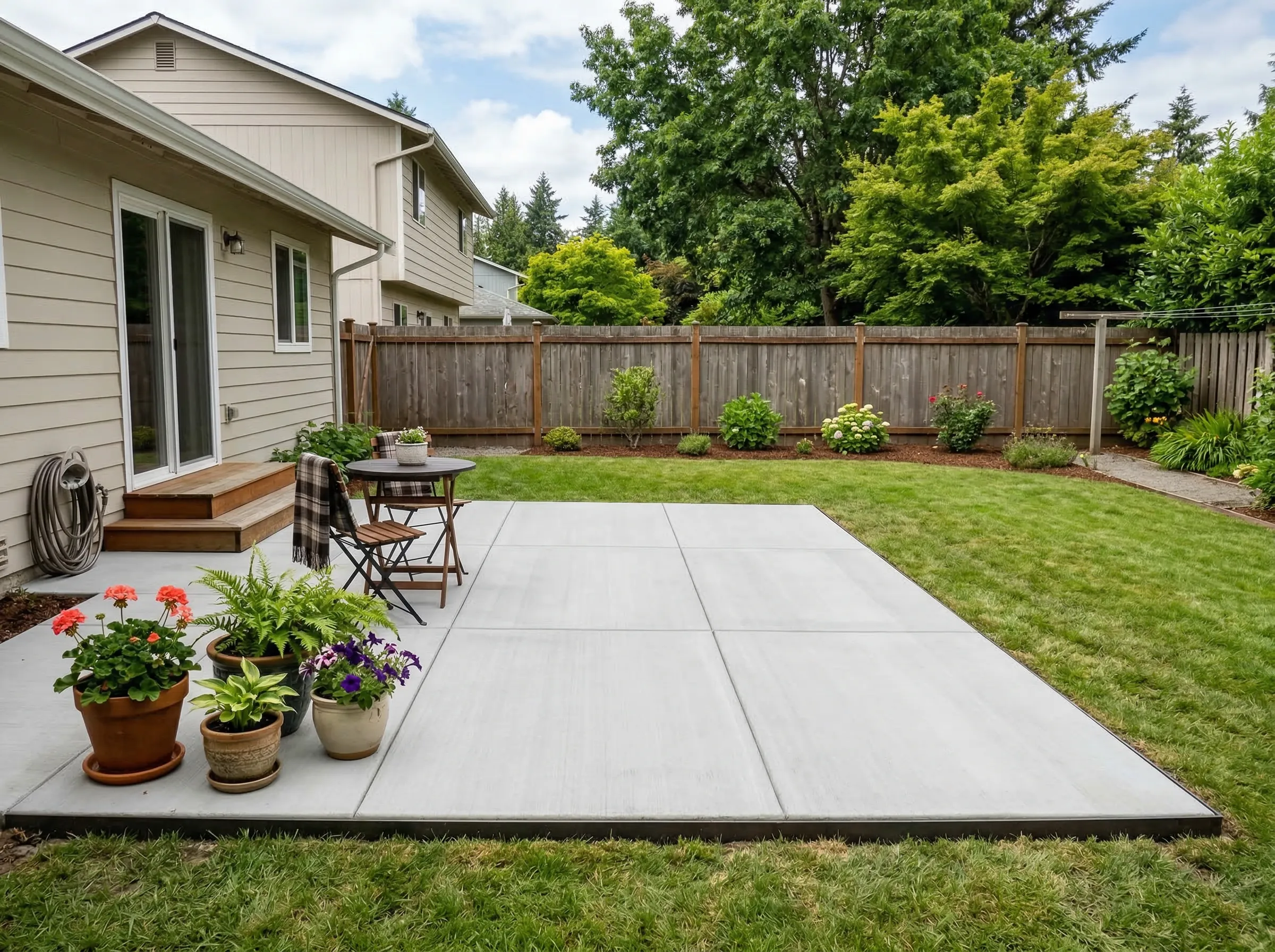
Angi lists a broom finish at $4 to $7 per square foot, stained concrete at $5 to $10, and stamped concrete at $5 to $15. Exposed aggregate shows up at $2 to $3 per square foot, which reads as the added cost over a plain slab. Ask each bidder whether a finish price covers the whole job or only the finish.
A broom finish is the lightly textured surface on most sidewalks, with good grip when wet. Exposed aggregate washes off the top paste to show the stones in the mix. Stain adds color. Stamped concrete is pressed with mats to look like stone, slate, brick or wood plank.
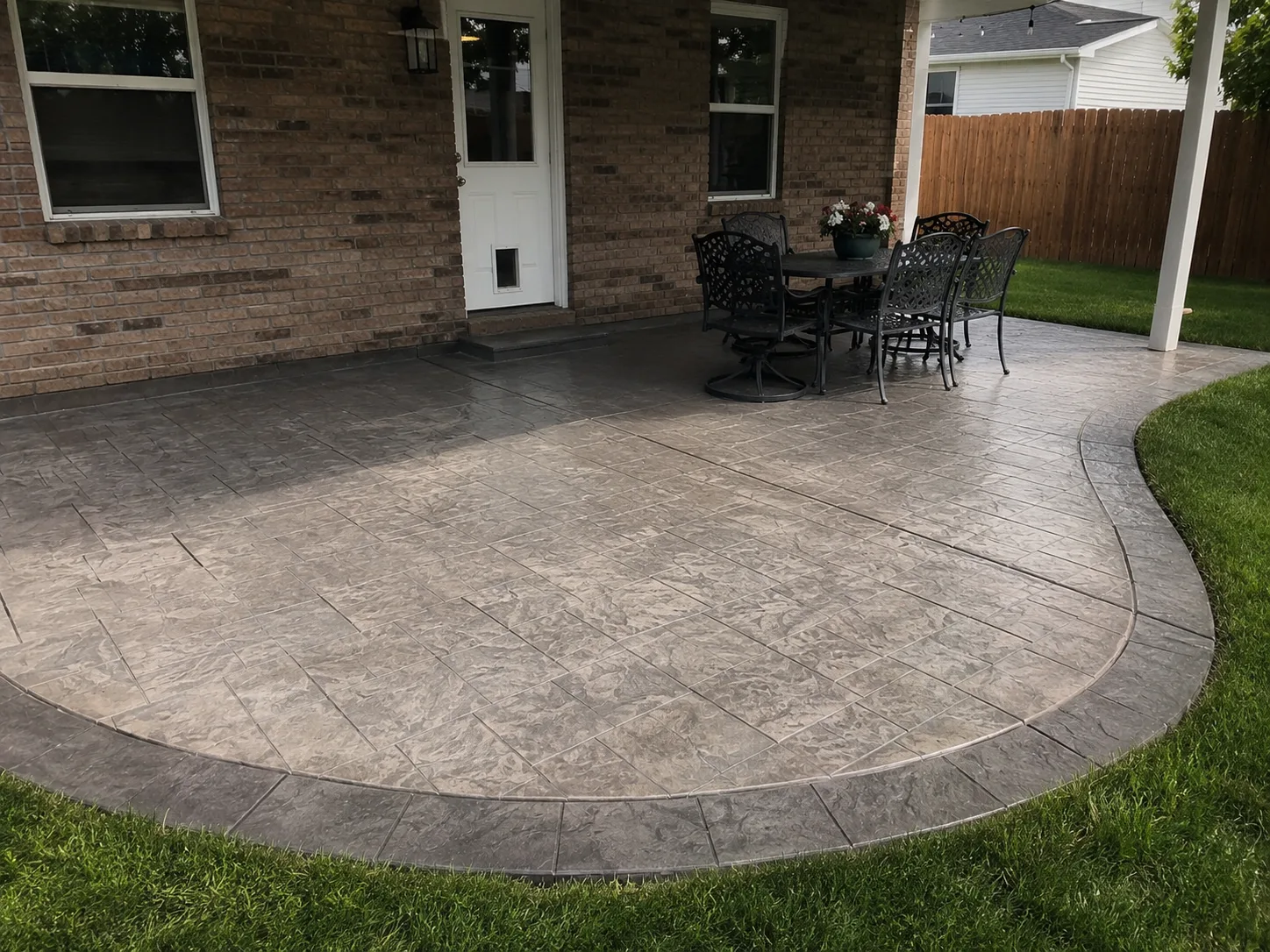
Stamped work costs more because the crew has to press the mats in a short window, then come back to seal. HomeAdvisor's 2026 data shows a stamped patio averaging $5,319, with most jobs between $2,961 and $7,821. A basic single pattern runs $8 to $12 per square foot, a pattern with a border $12 to $18, and complex hand-tooled work $18 to $28. Our stamped concrete page for Clarksville shows the patterns we offer, including slate, cobblestone and wood plank.
Stamped concrete also needs sealer. HomeAdvisor puts sealer material at $0.10 to $0.20 per square foot and recommends resealing every 2 to 5 years. Angi lists professional sealing at $3 to $5 per square foot, so plan on it as an ongoing cost.
Is a plain concrete patio cheaper than stamped concrete or pavers?
Yes. A plain broom-finish slab is the cheapest of the three in national data. Stamped concrete and pavers start at about the same price per square foot, around $8, but stamped tops out at $28 and pavers at $25 for installed work. Fixr's 120-square-foot example shows plain concrete at $865 to $1,085 against $1,310 to $1,770 for pavers.
| Patio type | National cost per sq ft | 12x12 (144 sq ft) at that rate | Repairs |
|---|---|---|---|
| Plain concrete (broom) | $4 to $7 (Angi) | $850 to $2,300 (Angi size data) | Cut out and re-pour the damaged section |
| Stamped concrete | $8 to $28 (HomeAdvisor) | About $1,150 to $4,030 | Cut out and re-pour; color match is hard |
| Concrete pavers | $8 to $25 installed (HomeAdvisor) | About $1,150 to $3,600 | Lift and replace single pavers |
Fixr points out that concrete is more prone to cracking when the ground shifts, while single pavers can be pulled and replaced. Pavers can loosen over time and grow weeds in the joints, and they need joint sand topped up. HomeAdvisor says a stamped patio can last up to 25 years with a proper install and regular sealing.
If you are stuck between the two decorative options, our guide on stamped concrete vs pavers in Clarksville goes through cost, upkeep and how each handles our freeze-thaw winters. If pavers win, the paver patio builder page covers interlocking, brick, stone and permeable pavers.
Want a real number for your yard?
Borja gives free estimates in Clarksville and across Montgomery, Davidson, Robertson and Cheatham counties. We walk the site, check the slope and drainage, and put the price in writing with a timeline before any work starts.
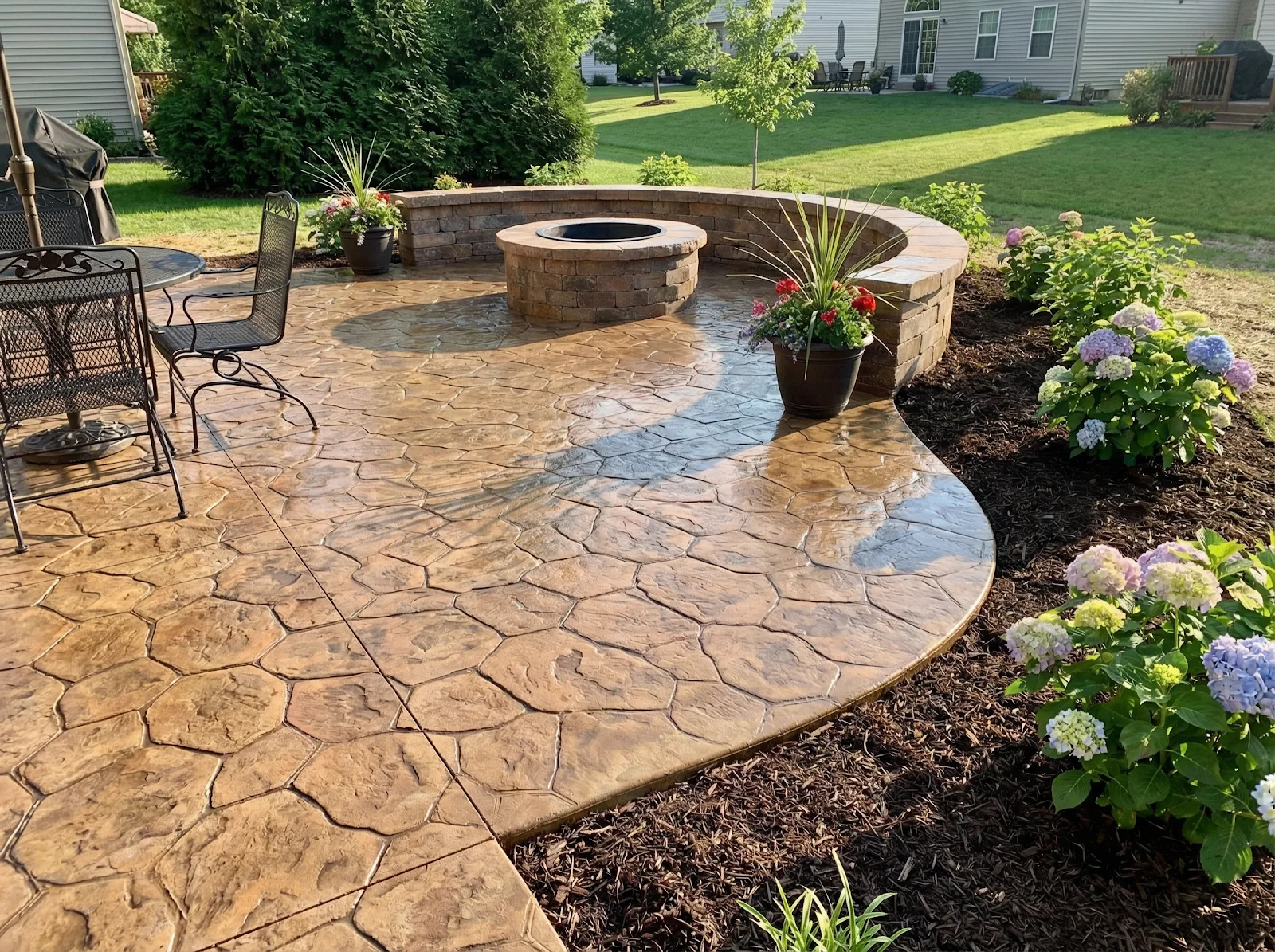
How much does adding a fire pit or seating wall to a patio cost?
HomeAdvisor's 2026 data puts a built-in, in-ground fire pit at $1,000 to $3,000, with some over $5,000. A 36-inch stone pit runs $350 to $3,000. The same source says a new patio with a built-in pit averages $6,750 nationally, compared with about $3,500 for a patio alone.
Planning the fire pit with the slab is cheaper than adding it later. HomeAdvisor notes that retrofitting an existing patio for a built-in pit can reach $5,000, because part of the slab may need to be cut out. Gas pits add plumbing, with a natural gas line at $15 to $25 per linear foot.
A seating wall around the pit is a short masonry wall, usually built from block or stone with a cap on top. Cost sites don't publish a clean number for seating walls, so ask for it as its own line priced by the linear foot. Our outdoor fire pit builder page shows the wood and gas options we build.
Do you need a permit for a concrete patio in Clarksville?
Usually not for a slab poured at ground level. The 2018 IRC, which Tennessee uses for one- and two-family homes, exempts flatwork like sidewalks and driveways that sits no more than 30 inches above adjacent grade and isn't over a basement. Clarksville Building & Codes has the final say, so call (931) 645-7426 to confirm.
Things change when the patio is part of something bigger. A wall over 4 feet, a roof, a gas line or new wiring can each pull in a permit. Angi lists patio permits at $50 to $400 nationally. Outside city limits, the Montgomery County Building and Codes office at 931-648-5718 handles it. Davidson, Robertson and Cheatham counties each have their own office.
Two more checks cost nothing. Tennessee law requires everyone who digs, homeowners included, to contact Tennessee 811 at least three working days before digging, and the service is free. If you live in a subdivision with an HOA, get architectural approval in writing before the forms go in. Our post on hardscape permits in Clarksville covers walls and driveways too.
When is the best month to pour a concrete patio in Clarksville?
April, May, September and October are the easiest months to pour in Clarksville. Visit Clarksville lists average highs of 72°F in April and October and lows that stay in the upper 40s to 60s. That keeps the slab above the 40°F cold-weather line without the 90°F heat of July and August.
Cold is the bigger risk. Under ACI 306R-16, as summarized by an NIH technical bulletin, cold weather means air temperature has fallen, or is expected to fall, below 40°F during the protection period. Fresh concrete has to be kept from freezing until it reaches 500 psi, which takes about 48 hours for most mixes held at 50°F. December through February lows average 27°F to 31°F here, so winter pours need blankets or heated enclosures and cost more.
Summer pours start early in the morning so the concrete doesn't set too fast. The full story on weather, joints and why slabs crack is in our guide to why concrete cracks in Clarksville and the best time to pour.
How do you read a written concrete patio estimate?
A good estimate lists the work line by line, not as one lump number. You should see square footage, slab thickness, base material and depth, reinforcement type, finish, joint layout, tear-out, grading, drainage and cleanup. If a line is missing, ask for it in writing before you compare bids.
Here is what to look for on each written estimate:
- Total square footage and the patio's measured dimensions
- Slab thickness in inches, plus base material type and compacted depth
- Rebar, wire mesh or fiber, and how much of it
- Finish type, pattern name and color if stamped or stained
- Control joint spacing and whether joints are tooled or saw cut
- Tear-out, haul-off and dump fees for any old slab
- Grading, fill and any drainage work
- Sealer, and whether the first coat is included
- Permits, if needed, and who pulls them
- Start date, expected days on site and payment schedule
Control joints deserve a second look. ForConstructionPros gives a rule of thumb of joint spacing at 2 to 2.5 times slab thickness in inches, measured in feet. A 4-inch slab means joints about every 8 to 10 feet. Joints should be cut a quarter of the way into the slab. A quote that doesn't mention joints at all is a red flag.
When two bids are far apart, line them up item by item; the cheaper one often skips base depth or tear-out. One homeowner told us he got quotes from several contractors and "Borja stood out." That kind of side-by-side read is how you find the difference.
How can you save money on a concrete patio without cutting the base?
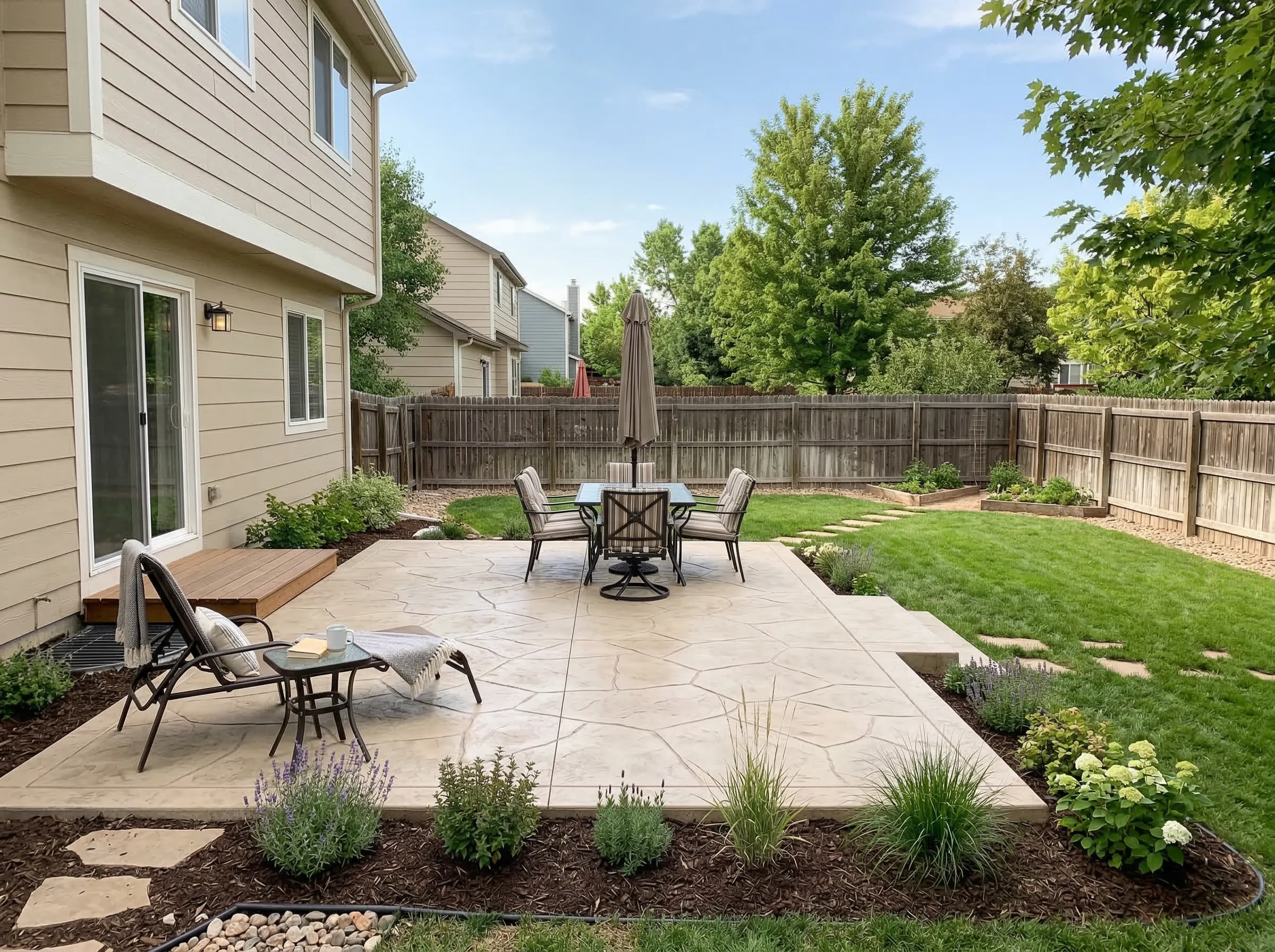
Save on size, shape and finish, never on base prep. A square or rectangle with a broom finish is the cheapest slab to form and pour. Skipping compaction, thinning the gravel base or dropping reinforcement saves a little today and costs a full tear-out when the slab cracks and settles.
Some ways to trim the price that don't hurt the slab:
- Pick a simple rectangle. Curves and many corners take more form work and labor.
- Go with a broom finish now and add color stain later, since staining works on cured concrete.
- Put a stamped border around a broom field instead of stamping it all.
- Book a spring or fall pour to avoid winter protection costs.
- Plan the fire pit or gas line with the slab instead of cutting it in later.
Size matters most. Dropping from 16x20 to 15x15 cuts about 95 square feet, worth hundreds at national rates.
You can see finished slabs and stamped patterns in our project gallery. If you live outside the city, the Montgomery County hardscaping page lists the areas we cover.
Frequently asked questions
How much does a 12x12 concrete patio cost?
Angi's 2026 national data puts a 12x12 concrete patio, about 144 square feet, at $850 to $2,300. That covers a fairly plain slab on a flat lot. In Clarksville, tear-out of an old slab, grading on a slope or a stamped finish can push a 12x12 well past that range, so get a written site quote.
Is stamped concrete more expensive than a plain concrete patio?
Yes. Angi lists a broom finish at $4 to $7 per square foot, while HomeAdvisor puts installed stamped concrete at $8 to $28. The extra cost comes from pattern mats, color, labor during a short working window, and sealer. Stamped patios also need resealing every 2 to 5 years to keep their color and finish.
Are pavers cheaper than concrete for a patio?
No, plain concrete is usually cheaper. Fixr's example of a 120-square-foot patio shows concrete at $865 to $1,085 and pavers at $1,310 to $1,770. Pavers cost more up front, but a cracked or sunken paver can be lifted and replaced, while damaged concrete has to be cut out and poured again.
Do I need a permit for a concrete patio in Clarksville, TN?
Usually not for a slab at ground level. The IRC model rule exempts flatwork no more than 30 inches above grade and not over a basement. Gas lines, electrical, roofs or tall walls can trigger permits. Call Clarksville Building & Codes at (931) 645-7426, or Montgomery County at 931-648-5718 outside city limits.
What is the best time of year to pour concrete in Clarksville?
Spring and fall. April and October average highs of 72°F in Clarksville, which keeps fresh concrete above the 40°F cold-weather line without summer heat. Winter pours need protection from freezing until the slab reaches 500 psi, about 48 hours at 50°F for most mixes, and that protection adds cost.
More guides for Clarksville homeowners
Get a written patio estimate from a local crew
Borja has over 12 years of experience pouring patios in Clarksville, Sango, Rossview and nearby towns. We'll measure your yard, check slope and drainage, and give you a line-item estimate and timeline, free.
- Angi, How much does a concrete patio cost?
- HomeAdvisor, Stamped concrete patio cost
- HomeAdvisor, Paver patio cost
- HomeAdvisor, Fire pit cost
- Fixr, Pavers vs concrete
- Visit Clarksville, Weather
- NIH Office of Research Facilities, Cold weather concreting technical bulletin (ACI 306R-16)
- ForConstructionPros, Rules for designing contraction joints
- Montgomery County Stormwater, Sinkhole information
- City of Clarksville, Building & Codes
- Tennessee Public Utility Commission, 811 call before you dig
